Define the placement scenario
- What’s the load weight at the farthest reach you must land it?
- How high is the landing zone—second-floor decks, roof parapets, or hopper inlets?
- How much room is available to square up at the landing without blocking traffic?
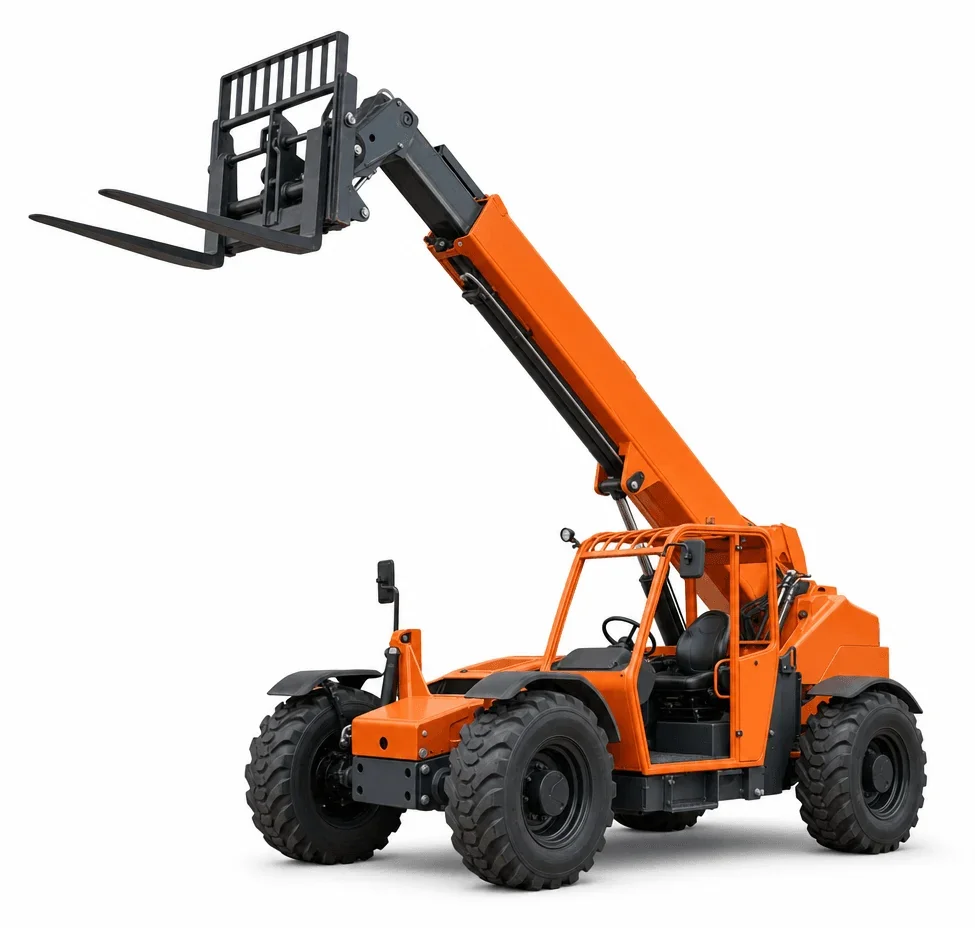
Load charts change as the boom extends. Capacity at full reach is typically lower than at short reach, so knowing the weight where you need to set it matters most.
Fresno factors that shape the machine choice
- Seasonal soil shifts on unpaved areas can influence tire selection and ground pressure needs.
- Heat and dust around industrial and processing sites may call for cool-down windows and filtration checks in site procedures.
- Tule fog can delay early moves to keep travel paths visible; yards with mixed truck traffic need clear routing when visibility drops.
Measurements that narrow the class
- Maximum lift capacity and capacity at the target reach.
- Lift height to clear parapets, mezzanines, or hopper rims.
- Turning radius and overall length for tight dock aprons or stacked pallets.
- Fork carriage type and compatible attachments specified by the site plan.
- Ground bearing along travel paths, especially over trench patches and utility crossings.
For repetitive pallet moves on smooth floors inside distribution buildings, compare /forklift-rental/. For elevated personnel access after material placement, see /telescopic-boom-lift-rental/ or /articulating-boom-lift-rental/.
Common Fresno applications
- Placing bundles to elevated decks on expanding medical and industrial builds.
- Loading raw materials at processing yards with limited turnaround space.
- Staging rooftop units from flat, compacted laydown areas.
Actual site conditions, the selected unit’s instructions, and jobsite procedures determine setup, travel, and lifts.
Related categories
- Personnel elevation after set: /boom-lift-rental/
- Interior pallet handling: /forklift-rental/
- Site perimeter support: /temporary-fencing-barricades-rental/