Perimeter purpose and duration
- Is the goal crowd control near a building entrance, asset security around materials, or lane separation in a working yard?
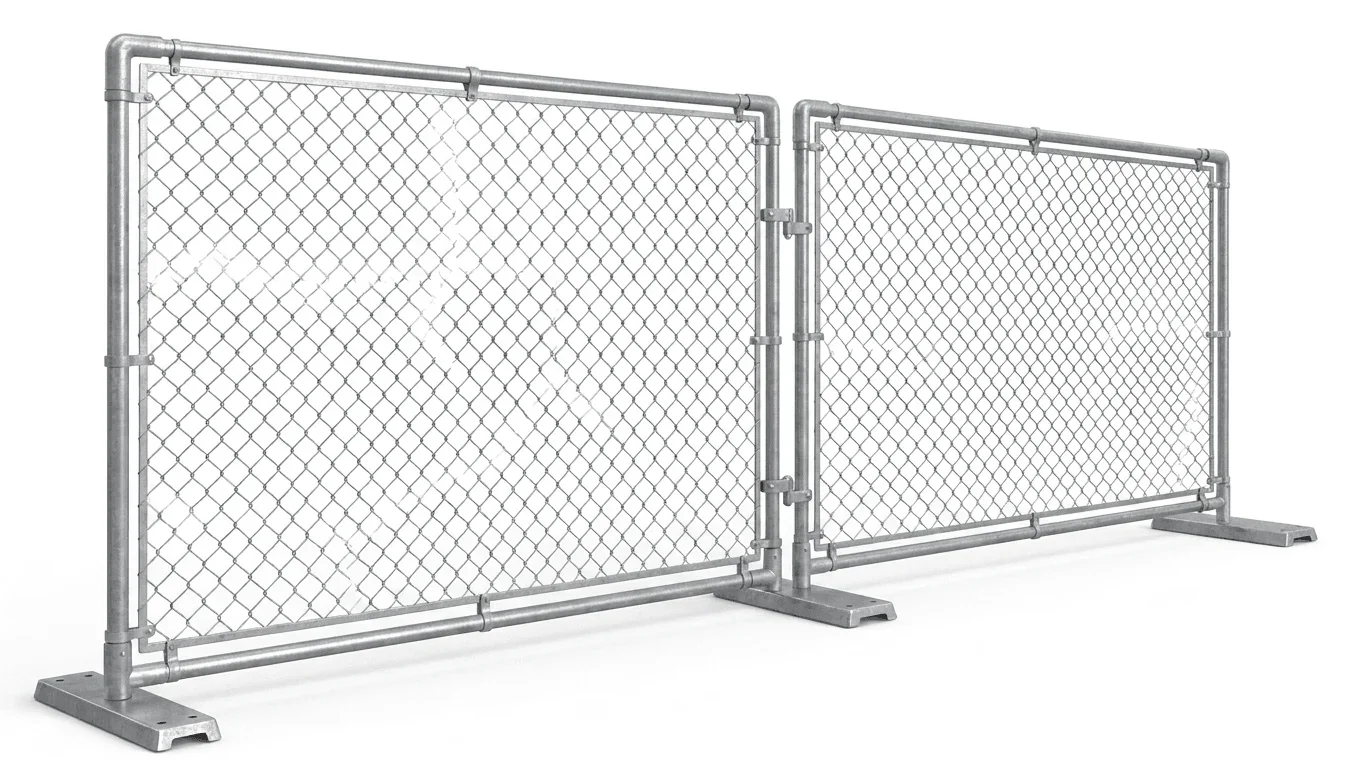
- Short events may favor lighter barricades; multi-week builds or yard segregation lean toward heavier panels and stabilized bases.
Surface and stabilization in local soils
The Central Valley’s flat terrain helps layout, but alkaline soils and post-rain soft spots can tilt bases. On industrial lots with patches of compacted base, plan for added support at turns and gate posts where loads concentrate. If forklifts or telehandlers will cross, preserve turning clearances and avoid funneling traffic into narrow chokepoints.
Visibility, weather, and operations
- Heat can loosen wraps and screens; select screening only when wind and temperature patterns won’t stress the line.
- Tule fog lowers visibility. Gate locations and barricade lines should anticipate shorter sight distances for trucks and lifts entering from side streets or yard lanes.
- Night work around logistics hubs may need defined corridors that integrate with generators and light towers to reduce glare at approaches.
Interactions with elevated work
If signage, façade repair, or MEP work at height occurs along the fence line, confirm that barricades leave setback room for boom lifts, articulating booms, or rough-terrain scissor lifts. Ask early: can the machine sit below the task without the fence intruding on the platform envelope?
Access control and material flow
Gate placement should reflect actual truck and forklift approach angles at local distribution buildings and agricultural yards. Place wider gates where trailer swing is greatest, and create staging pockets so queues do not spill into public approaches during fog or peak heat.
For related site planning across lifts and support gear, see the products overview.